Stacked Diamond Crochet Christmas Stocking Free Pattern
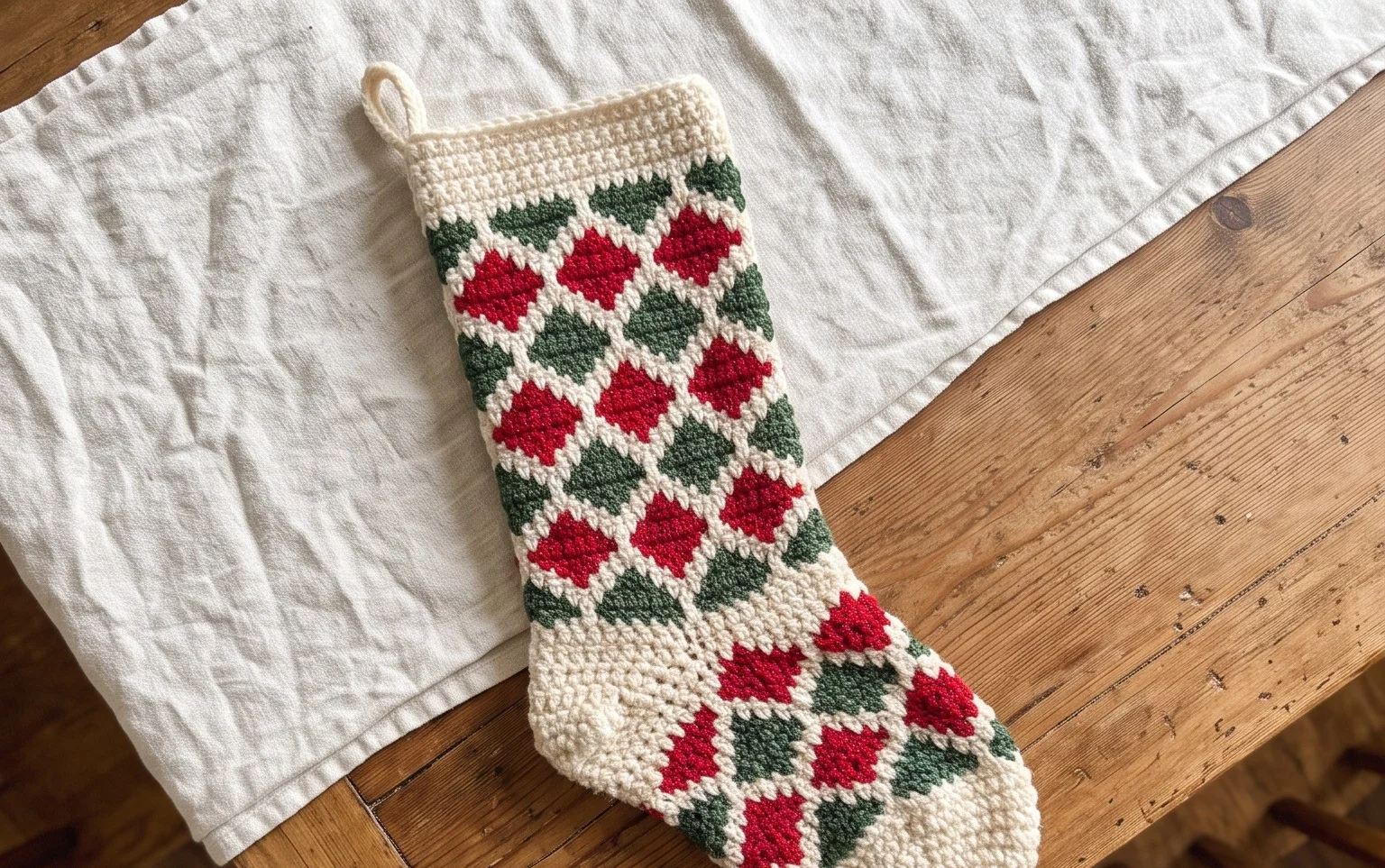
A handmade holiday decoration brings a tactile warmth to the mantle that store-bought plastic versions simply lack. This specific design features a geometric motif that creates a satisfying, thick texture, giving the final piece a sturdy structure capable of holding plenty of small gifts or candy. It works well for someone comfortable with basic stitches who wants to try working in rounds without getting lost in complicated repeats. You will focus on managing your tension across the color changes to keep the pattern consistent. Each finished piece has a professional, heirloom appearance that fits naturally into any seasonal home decor collection.
Why This Project Is Worth Making
The Classic Crochet Dishcloth is the quintessential starter project for anyone new to working with cotton yarn. It relies on the moss stitch—a simple combination of single crochet and chain spaces—to create a dense yet flexible fabric that scrubs effectively without being too bulky. You can complete this project in under an hour, making it an ideal choice for testing out a new yarn color or building your confidence with tension control. Because it uses a small amount of yarn, it serves as a practical way to use up leftover cotton from larger home decor projects.
I managed to finish three of these during a single weekend of watching television, and they have replaced all my store-bought sponges in the kitchen because they wash so well.
— Sarah, home crafter
Pattern Overview & Skill Level
- Skill Level: Beginner
- Approximate Time: 45 to 60 minutes
- Construction: Worked in flat rows, turning at the end of each row to maintain a uniform texture.
- Finished Dimensions: 8 inches by 8 inches square.
Materials & Supplies Needed
- Yarn: Worsted weight (#4) 100% cotton yarn, approximately 50 yards per cloth. Cotton is essential for heat resistance and absorbency.
- Hook Size: 5.0 mm (US H-8).
- Notions: Tapestry needle for weaving in ends, scissors, and optional locking stitch markers to keep track of row edges.
- Safe yarn substitutions: You may use a cotton-acrylic blend for a softer feel, though it will be slightly less absorbent than 100% cotton. Avoid wool or synthetic fibers like acrylic or polyester, as they do not handle high-heat dishwashing tasks well and can melt or retain odors.
Stitch Guide & Abbreviations (US Terms)
- ch = chain
- sc = single crochet
- st = stitch
- sk = skip
- rep = repeat
- Turning ch = chain 1 at the start of a row to bring the yarn to the correct height for the first stitch.
Step-by-Step Pattern Instructions
Main Dishcloth Body
The moss stitch creates a subtle checkerboard effect by placing single crochets into the chain spaces of the previous row.
- Foundation: Ch 32.
- Row 1: Sc in 4th ch from hook, *ch 1, sk 1 ch, sc in next ch; rep from * to end. Turn. (15 sc, 15 ch-1 spaces).
- Row 2: Ch 2 (counts as first sc and ch-1 space), sk first sc, sc in first ch-1 space, *ch 1, sk next sc, sc in next ch-1 space; rep from * ending with sc in the last ch-1 space. Turn. (15 sc, 15 ch-1 spaces).
- Rows 3 to 30: Rep Row 2 until the piece measures 8 inches long.
- Finishing: Fasten off, leaving a 6-inch tail. Weave the end securely back into the stitches using your tapestry needle.
Border (Optional)
To provide a cleaner edge and extra durability, you can work a simple border around the perimeter.
- Join yarn in any corner, ch 1, and work 3 sc in the corner space.
- Work sc evenly along each side of the dishcloth, placing 3 sc in every corner to keep the fabric flat.
- Join with a sl st to the first sc and fasten off.
Care & Washing Instructions
- Machine wash in warm water on a gentle cycle to remove oils and kitchen residue.
- Tumble dry on low heat or lay flat on a clean towel to air dry to prevent shrinkage.
- Reshape the cloth by pulling gently on the corners while it is damp to ensure it remains a perfect square during the drying process.
Pro Tips & Common Mistakes to Avoid
- Consistent tension is vital for a functional dishcloth. If your stitches are too tight, the fabric will be stiff and lose its scrubbing ability; if they are too loose, it will lose its shape. Try using a slightly larger hook if you notice your tension pulling the fabric inward.
- Always place a stitch marker in the first chain-space of your row to identify where to place your final stitch, as it is easy to miss the edge stitches in moss stitch patterns.
- When weaving in ends, go back and forth through the stitches at least three times in different directions to ensure the yarn does not unravel during frequent machine washing.
- You can easily adjust the size of the cloth by using an even number of starting chains. A wider starting chain will require more total yardage, so ensure you have enough extra cotton if you decide to scale up to a larger cleaning rag.
Frequently Asked Questions
Can I use a different yarn weight for this pattern?
While you can use DK or bulky weight yarn, you will need to adjust your starting chain count to reach the desired 8-inch width. DK weight will require more stitches, while bulky weight will require fewer.
Is this project suitable for absolute beginners?
Yes, this is an excellent first project because it teaches you how to maintain consistent row edges and introduces you to the concept of working into chain spaces rather than individual stitches.
Can I sell the dishcloths I make from this pattern?
You are welcome to sell finished items made from this pattern as long as you credit the design. Please do not redistribute or sell the text of the pattern itself.
Why is my rectangle not a perfect square?
This often happens if the tension changes mid-project or if you accidentally skip a stitch at the end of a row. Always count your stitches at the end of every row to ensure you have the same number you started with.
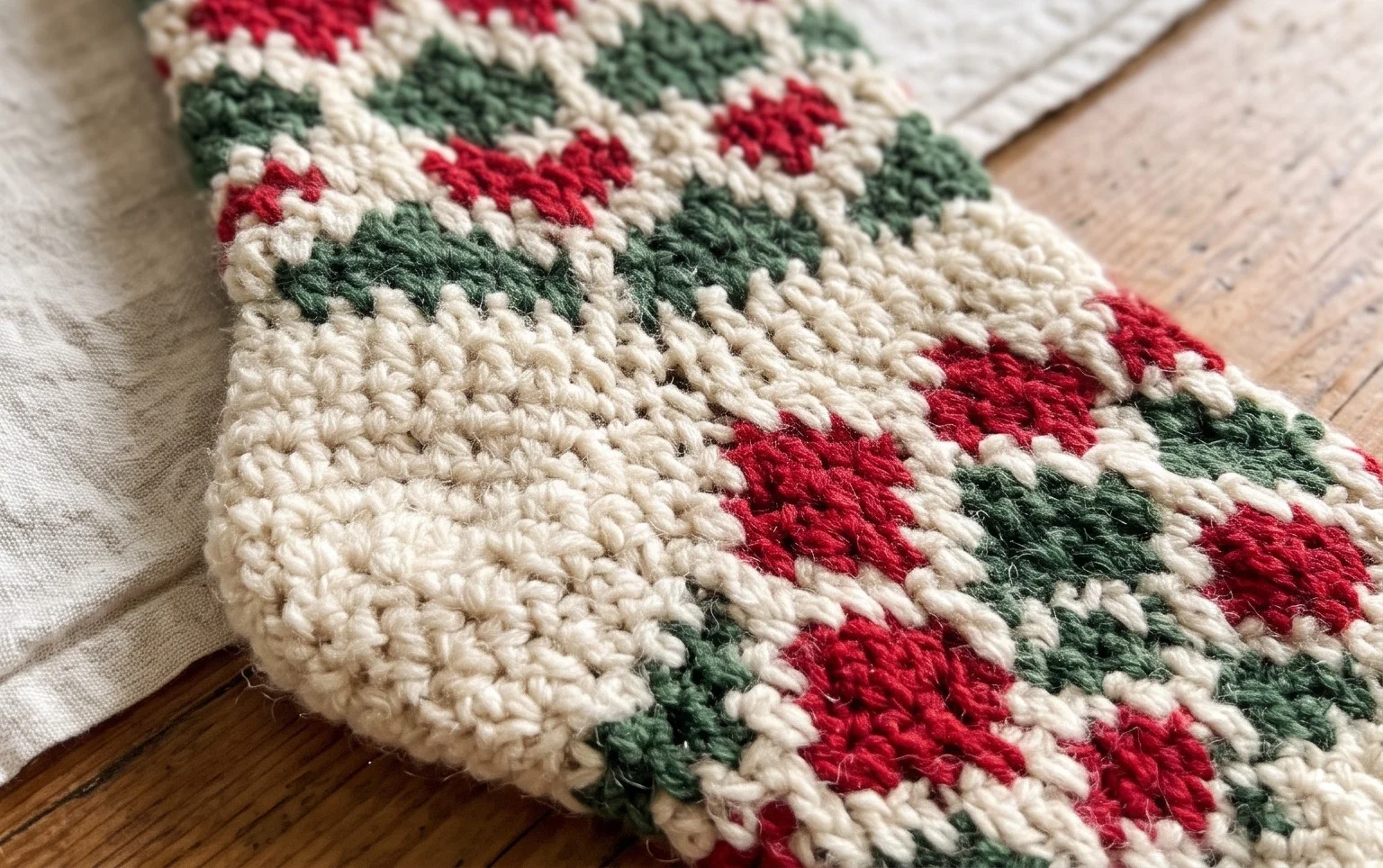
Holding a completed stocking that you crafted yourself offers a genuine sense of accomplishment during the busy holiday season. Try working yours in a classic cream and forest green for a traditional look, or experiment with chunky glitter yarn to add a subtle holiday shimmer. We love seeing how different your projects turn out, so please share a photo of your work on your favorite social media platform. Feel free to browse through our other seasonal crochet projects to find more inspiration for your next afternoon hobby session.